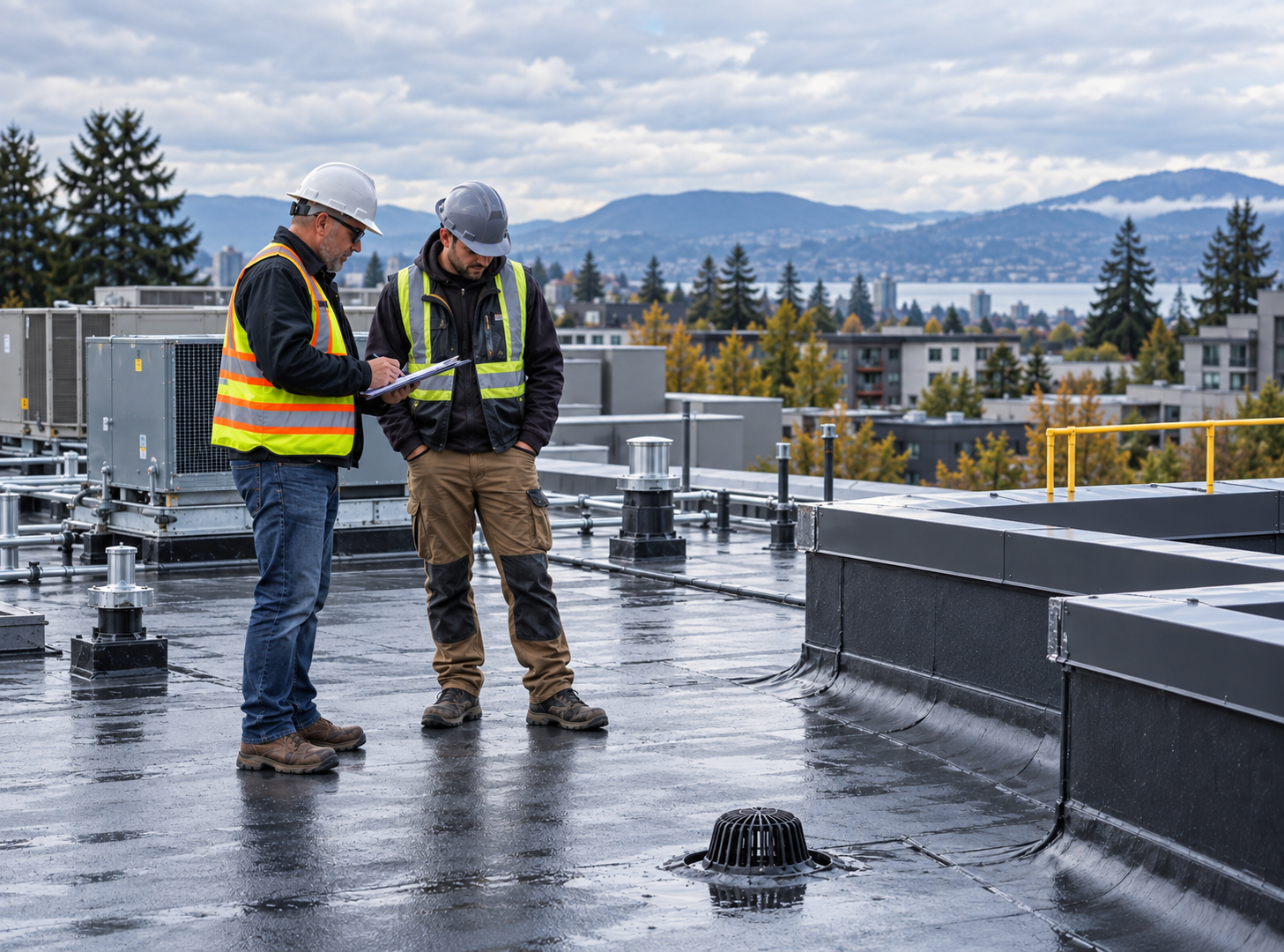
At some point in the life of almost every commercial building, the roof reaches the end of its useful life. The membrane has aged well past its warranty, repairs are happening more often than they used to, and the conversations in budget meetings start circling around the same question: do we replace it now, or do we hold off for another year? Waiting feels like the responsible financial choice in the short term. But what that decision actually costs over time is worth understanding clearly before it gets made.
An Old Roof Does Not Fail the Way You Might Expect
Most people picture a failing roof as one that is obviously leaking, and while that eventually happens, it is rarely how the trouble starts. A roof that has run its course often continues to look acceptable on the surface while quietly letting moisture in every time it rains heavily or snow melts. On low-slope commercial roofs, water can work its way through small cracks or failed seams that are easy to miss during a routine inspection. Once water gets under the membrane, it starts saturating the insulation below it. Wet insulation loses most of its ability to do its job, which means your heating and cooling systems are working harder than they should be every single month, and you are paying for it in your energy bills without necessarily connecting the two.
The Point Where Costs Really Start to Climb
The insulation between the membrane and the structural roof deck is a kind of buffer. Once it becomes fully saturated, that moisture stays in constant contact with whatever is below it. For steel roof decks, that means corrosion that gradually weakens the structure. For wood-based assemblies, it means rot. By the time moisture has reached the deck itself, what started as a re-roofing project has turned into something far more complicated, with deck sections that need replacing, potentially an engineering assessment, and a longer project timeline that means more disruption to your building and the people using it.
Interior Damage Adds Up Fast
Water that makes it through the roof does not stop at the structural layer. It keeps going until something stops it, and depending on what is directly below, that can mean damaged ceilings, moisture-affected electrical systems, ruined inventory or equipment, and disruption to the tenants or operations in the building. In more serious cases, this can lead to insurance claims, temporary disruptions, and repair costs that approach or exceed what a timely roof replacement would have cost. The catch is that nobody knows exactly where or when the next serious leak will happen, only that an aging system makes it more likely every season.
Emergency Repairs Are Always More Expensive Than Planned Work
When a roof fails in a way that needs an immediate response, everything about the cost structure changes. Urgent mobilization, after-hours labor, and compressed timelines all drive up the price significantly compared to the same work done as a planned project. And emergency repairs on an old system are usually buying a short window of time rather than fixing the real problem, which means the replacement conversation comes back around anyway, often within the same budget year.
The Better Way to Think About Timing
Deciding when to replace a commercial roof is really a question of risk and total cost over time, not just whether the building is leaking today. A roof that has needed multiple repairs in recent years and is showing signs of age is a system in decline. The question is not whether it will need replacing but when, and whether that replacement happens on your schedule with proper planning or as a reaction to something going wrong. Planned replacement, coordinated with budget cycles and done with the time to specify the right system for your building, almost always produces a better result.
Partner With a Team That Plans Ahead With You
Mack Kirk has been reroofing commercial and institutional buildings across British Columbia, and we understand what it takes to help clients make smart, well-timed decisions about their roof systems. Whether you are trying to assess how much life your current roof has left, plan a phased replacement program, or understand the full scope of what a replacement would involve, we are here to help you think it through.
If your roof has been coming up more often in budget discussions, it may be worth taking a closer look now so you can plan the next step on your terms, not in response to a problem.