On most new construction projects, roofing is planned as one scope among many on a busy schedule. Yet the roof is one of the first systems to protect everything built beneath it, and the decisions made about it during design tend to shape cost, timelines and building performance for decades.
For developers, general contractors and project managers, giving the roof proper attention early on is one of the easiest ways to avoid surprises on site and hand over a building that performs the way it was designed to.
Why Roofing Deserves Attention Early in the Project
A roof does a lot more than keep the rain out. It influences how water drains from the building, how well the structure is insulated, where rooftop equipment can sit and how the building envelope comes together at walls, parapets and penetrations.
When these questions are left until late in the project, the result is often redesigns, change orders or details that are difficult to build properly. Where the project delivery model allows early contractor involvement, bringing a commercial roofing contractor into the discussion can help identify constructability, sequencing and detailing issues before work begins.
Choosing the Right Roofing System
Commercial and multi-unit buildings can use a range of roofing systems, and the best choice depends on the roof slope, how the building will be used, performance expectations and budget. Some of the most common options include:
- SBS modified bitumen: A durable, multi-layer membrane system that is widely used on low-slope commercial roofs and holds up well in BC’s wet climate.
- Single-ply and synthetic membranes: Lighter membrane systems that work well on large, low-slope roof areas with less details and less rooftop equipment.
- Metal roofing: A long-lasting option for both low and steep slopes, often chosen for its durability and clean, modern appearance.
- Architectural shingles and cedar: Common choices on steep-slope residential and multi-family projects where the look of the roof matters.
The way the roof is assembled is just as important as the material on top. Low-slope roofs can be built as insulated, non-insulated or inverted assemblies, and the right approach will depend on the project’s energy targets and how the roof space will be used.
Coordinating Roofing With Other Trades
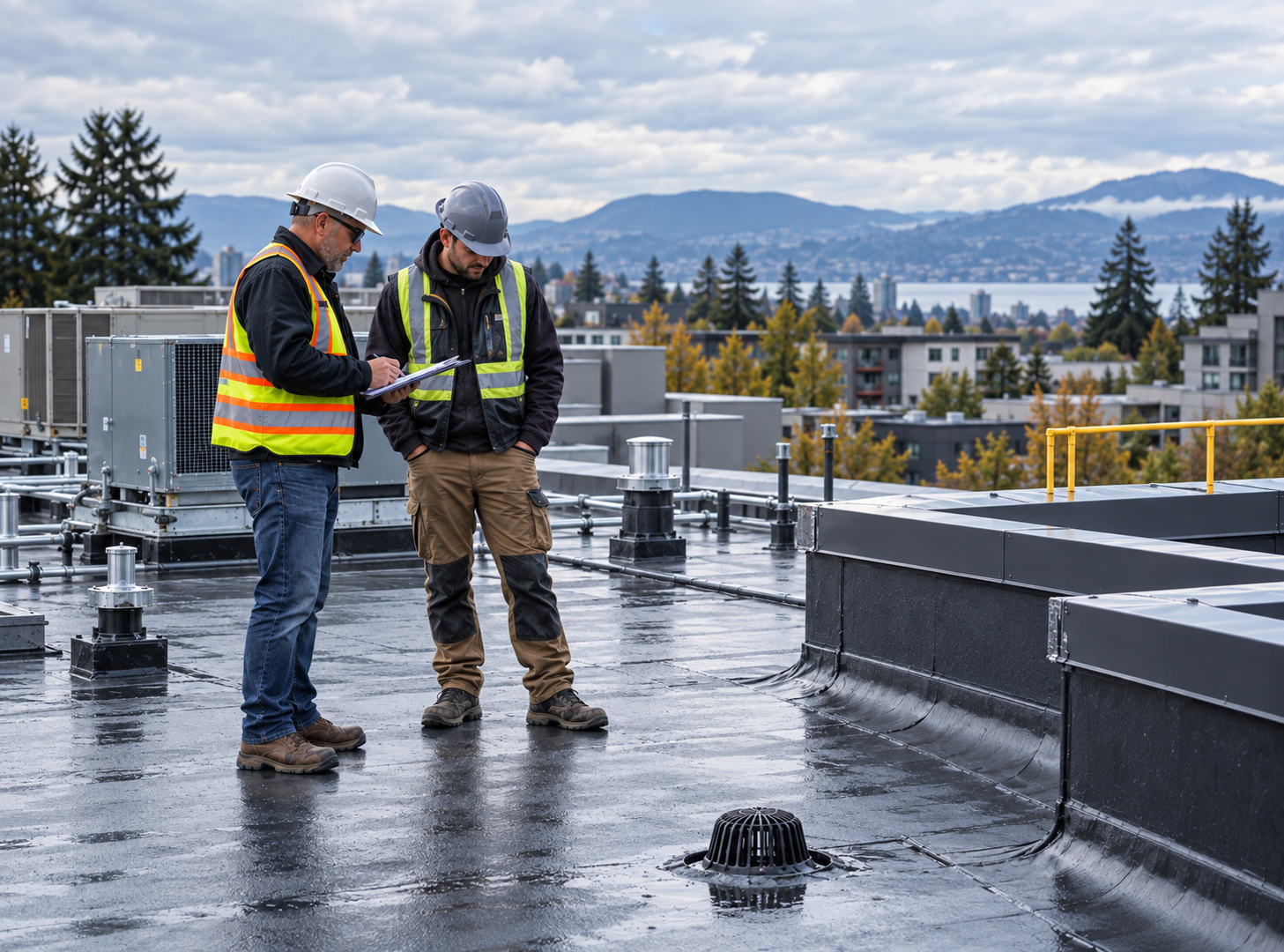
Roofing work rarely happens in isolation, since mechanical units, vents, drains, solar mounting and cladding all meet the roof at some point. Each of these connections can become a leak point if it is not planned and detailed carefully, which is why coordination between trades matters so much. In our experience, good coordination usually comes down to a few areas:
- Sequencing: Knowing when the roof deck will be ready, and which trades need access before and after the roofing crew.
- Penetration planning: Confirming the locations of vents, drains and equipment supports before the membrane is installed.
- Envelope transitions: Making sure the roof ties in properly with walls, parapets and cladding.
- Weather planning: Allowing time for BC’s rainy seasons, which can narrow the window for certain types of installation.
Warranties and Documentation
On a new build, the roof warranty becomes part of what the owner inherits at handover. Warranty terms vary depending on the system and manufacturer, and some SBS systems can carry warranties of up to 30 years.
Mack Kirk is a member of the Roofing Contractors Association of BC (RCABC), so we can offer the RoofStar Guarantee on eligible projects. The guarantee is backed by both the contractor and RCABC Guarantee Corp. An independent firm observes the work while the roof is being installed, and the roof is reviewed again at set points during the guarantee term.
It is worth asking your roofing contractor early in the project what the warranty will cover, which inspections are required and what documentation will be provided at completion. Having these answers up front makes handover much smoother and protects the owner long after the project has closed out.
Getting Roofing Right From the Start
A well-planned roof keeps the construction schedule on track and protects the building for many years afterwards. The earlier your roofing contractor is involved, the easier it becomes to choose the right system, work through the details on paper and avoid costly corrections on site.
Mack Kirk has been serving British Columbia since 1908 and works with consultants, general contractors, strata managers and owners on steep and low slope roofing for both new construction and reroofing projects. Because we handle roofing, cladding and metal fabrication under one roof, our team is well placed to help coordinate the details that matter most.
If you are planning a new build, we would be happy to talk through your roofing scope. Reach out to the team at Mack Kirk to get started.